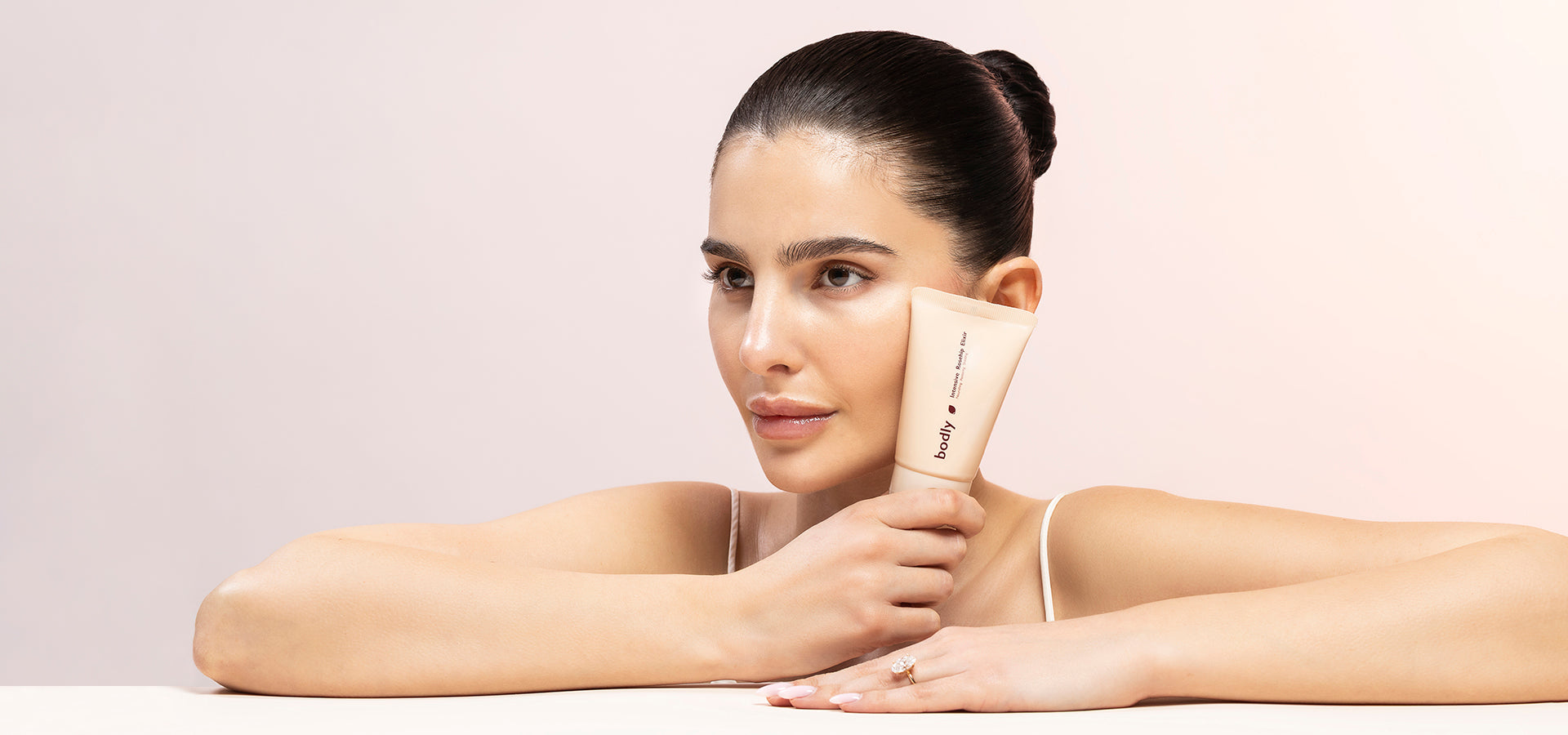


Natural face products


Type:
Intensive Rosehip Elixir - Restorative Face Cream


Type:
Rosehip Duo – A Complete Routine for Radiant Skin


Delicate Rosehip Cleanse - Gentle Cleansing Gel
- 100% natural formula
- with floral waters and plant-based humectants
- suitable for daily use
- suitable for sensitive skin
Free of sulfates, parabens, artificial colors and added fragrances.

Intensive Rosehip Elixir - Restorative Face Cream
- 100% natural formula
- with rosehip, calendula, evening primrose, and Olive Active Omega+
- rich, yet fast-absorbing texture
- suitable for sensitive, dry skin prone to pigmentation
Contains no sulfates, parabens, artificial colors, or added fragrances.

For sensitive skin
Created with sensitive skin in mind

100% natural ingredients
Clean and natural care for your skin

Eco-Friendly
Beauty with care for nature

Cruelty-free
Ethical cosmetics without animal testing
Active ingredient
Rosehip is one of the plants richest in biologically active substances used in cosmetics and natural medicine.

What are the unique properties of rosehip?
What are the unique properties of rosehip?
It is known for its high content of vitamin C, antioxidants, and fatty acids, which support skin regeneration and strengthen the skin barrier.
What is rosehip?
What is rosehip?
Rosehip (Rosa canina) is the fruit of the wild rose and has been used for centuries in traditional medicine and cosmetics. It is a natural source of:
●vitamin C
●vitamin A
●vitamin E
●polyphenols
●carotenoids
●essential fatty acids
What are the main unique properties of rosehip for the skin?
What are the main unique properties of rosehip for the skin?
1) Strong antioxidant effect
2) Supports the restoration of the skin barrier
3) Improves skin hydration
4) Soothes irritation and redness
5) Helps even out skin tone
What skin type is rosehip suitable for?
What skin type is rosehip suitable for?
Rosehip is a versatile ingredient, but is particularly beneficial for:
● sensitive skin
● dry skin
● reactive skin
● skin with an impaired barrier
● skin with redness
Blog

Why choose natural cosmetics?
Why choose natural cosmetics? In recent years, more and more people are turning to natural cosmetics as a gentler alternative. The reason is not just a trend — it's a shift in how we understand skin care — with a focus on ingredients, long-term health, and sustainability. Natural cosmetics work in sync with the skin's natural processes, rather than suppressing them. This makes them particularly suitable for sensitive, dry, reactive skin, and skin with a compromised barrier. What are natural cosmetics? Natural cosmetics use ingredients of natural origin, such as: plant oils, herbal extracts, minerals, vitamins, and natural antioxidants. These ingredients support the skin's natural functions and reduce the risk of irritation. Important: natural does not necessarily mean "100% organic," but rather formulated with a focus on safety, tolerability, and balance. Key advantages 1) Better tolerability for sensitive skin Sensitive skin often reacts to harsh ingredients, synthetic fragrances, or strong cleansing agents. Natural cosmetics contain fewer irritants and simpler formulas, which reduces the risk of redness, stinging, dryness, and irritation. 2) Supports the skin's natural processes Natural ingredients are often similar to the skin's natural lipids. This means they support regeneration, maintain hydration, strengthen the barrier, and reduce sensitivity. 3) Lower risk of accumulating harsh substances Natural cosmetics often avoid strong synthetic fragrances, harsh cleansing agents, and unnecessary chemical additives, making them suitable for long-term use. 4) Suitable for long-term care Natural cosmetics do not seek a quick effect, but a sustainable result — through gradual restoration, stabilization, and maintenance of balance. This is especially important for sensitive skin, chronic dryness, and reactivity. 5) A more sustainable choice for the environment Many natural brands emphasize ecological production, less pollution, sustainable sourcing of raw materials, and recyclable packaging. This matters not only for the skin but also for the environment. How to recognize quality natural cosmetics? Not every product advertised as "natural" truly meets this standard. Pay attention to: The ingredient list — look for clear and recognizable ingredients, plant extracts, and a minimalist formula. Balanced formula — effectiveness, safety, and stability. Tolerability — the best indicator is the skin's reaction. If it feels calm, hydrated, and comfortable — the product is suitable. Natural or conventional cosmetics — which is better? The answer is not absolute. The most important thing is that the product is safe, well-formulated, and suitable for the specific skin type. In many cases, natural cosmetics are a preferred choice for sensitive, dry skin and skin with a compromised barrier. The most common myths Myth 1: Natural cosmetics are not effective In fact, many plant ingredients have proven properties — hydration, soothing, and antioxidant protection. Myth 2: Natural cosmetics cannot cause irritation Any ingredient — natural or synthetic — can cause a reaction. Therefore, it is important to do a patch test and introduce new products gradually. Myth 3: Natural cosmetics are always safer Safety depends on the formula, concentration, and quality of the ingredients — regardless of their origin. Who are they suitable for? Natural cosmetics are particularly suitable for sensitive, dry skin and skin with a compromised barrier, as well as for people who seek minimalist care or a sustainable lifestyle. How to incorporate them into your daily routine? The best approach is gradual: Choose a gentle cleansing product. Add a hydrating cream. Observe the skin's reaction and adapt as needed. Natural cosmetics combine skin care, better tolerability, a more conscious choice, and a sustainable approach — making them a logical part of modern skin care.
Learn more
What are the unique properties of rosehip?
What are the unique properties of rosehip? Rosehip is one of the richest plants in biologically active substances used in cosmetics and natural medicine. It is known for its high content of vitamin C, antioxidants, and fatty acids, which support skin regeneration and strengthen the skin barrier. In modern natural cosmetics, rosehip is particularly often used for: sensitive skin dry skin irritations damaged skin barrier uneven skin tone Its properties make it a valuable ingredient for daily skin care, especially when the goal is regeneration, protection, and hydration. What is rosehip? Rosehip (Rosa canina) is the fruit of the wild rose and has been used for centuries in traditional medicine and cosmetics. It is a natural source of: vitamin C vitamin A vitamin E polyphenols carotenoids essential fatty acids These substances act synergistically and support the skin's natural defense mechanisms. The main unique properties of rosehip for the skin 1) Strong antioxidant action Rosehip contains extremely high levels of antioxidants, which: protect cells from oxidative stress reduce inflammation slow down aging processes support skin regeneration This makes it particularly useful for sensitive, irritated, and stressed skin exposed to pollution. 2) Supports skin barrier restoration One of the most valuable characteristics of rosehip is its ability to support skin barrier restoration. It contains fatty acids such as linoleic and linolenic acid, which: strengthen barrier function reduce water loss improve elasticity reduce sensitivity 3) Improves skin hydration Rosehip helps retain moisture in the skin, which is key for dry, dehydrated, flaky, and sensitive skin. Regular use of rosehip products can lead to: softer skin smoother texture healthier skin barrier 4) Soothes irritations and redness Rosehip has natural anti-inflammatory properties and is suitable for sensitive, reddened, irritated, reactive, and dry skin. This makes it a valuable ingredient in daily care products. 5) Helps even out skin tone Vitamin C and carotenoids in rosehip help achieve: a more even skin tone a fresher skin appearance better texture This is not an aggressive effect, but a gradual and gentle process. What skin types is rosehip suitable for? Rosehip is a universal ingredient, but it is especially useful for: sensitive skin dry skin reactive skin skin with a compromised barrier skin with redness It is generally well tolerated and has a low risk of irritation, making it suitable for daily use. In what cosmetic products is rosehip used? It is most often found in: face creams serums cleansing products masks balms In natural cosmetics, rosehip is often used in the form of: rosehip oil rosehip extract rosehip powder How to recognize a quality rosehip product? When choosing cosmetics with rosehip, it is good to pay attention to: Concentration Higher concentration means a stronger effect. Form of the ingredient The most effective are: standardized extracts cold-pressed oil concentrated powders Product composition It is good to avoid: harsh cleansing agents unnecessary fragrances strong preservatives Why is rosehip a valuable ingredient in natural cosmetics? Rosehip fits perfectly into the philosophy of natural cosmetics because it: is a plant source of active substances supports the skin's natural processes has good tolerability can be used long-term supports skin barrier restoration This makes it a logical choice for brands that focus on: sensitive skin, minimalist formulas, and barrier care.
Learn more
How to build a routine for sensitive skin?
How to Build a Routine for Sensitive Skin? Sensitive skin requires carefully chosen and consistent care. It reacts faster to external factors, cosmetic products, and environmental changes. Therefore, a properly built routine should not be complicated, but rather stable, minimalistic, and tailored to the needs of the skin barrier. The main goal of a routine for sensitive skin is to: calm the skin restore barrier function maintain hydration reduce the risk of irritation What does sensitive skin mean and why is a routine so important? Sensitive skin often has a more vulnerable skin barrier, leading to a faster reaction to external factors. The most common symptoms: redness stinging dryness tightness flaking reactivity to cosmetics A proper routine helps stabilize the skin's condition and reduce these symptoms in the long term. Key Principles for Building a Routine for Sensitive Skin 1) Fewer products, but properly selected Sensitive skin responds better to: a minimalist routine clear formulas stable ingredients It is not necessary to use many products. In most cases, 3–4 basic steps are perfectly sufficient. 2) Consistency Skin loves predictability. Frequent product changes can lead to: irritation unstable barrier reactivity Best approach: choose a routine and follow it for at least 4–6 weeks. 3) Focus on the skin barrier When the barrier is healthy: skin retains moisture irritation decreases sensitivity stabilizes Therefore, the routine should be built around: gentle cleansing, hydration, and protection. Key Steps in a Sensitive Skin Routine Step 1: Gentle Cleansing Cleansing is the foundation of any routine. An unsuitable cleansing product can damage the skin barrier from the very first step. What to look for: gentle cleansing ingredients pH around 5–5.5 hydrating components minimalist formula How often: twice daily — morning and evening; for very dry skin, only in the evening. Step 2: Hydration After cleansing, the skin needs moisture replenishment. Suitable hydrating ingredients: glycerin hyaluronic acid panthenol aloe vera This step reduces dryness, improves comfort, and supports barrier function. Step 3: Nourishing and Protecting the Skin Barrier Cream is a key product for sensitive skin. It seals in moisture, strengthens the barrier, and reduces sensitivity. Look for ingredients like: ceramides squalane oils panthenol niacinamide Step 4: Sun Protection (morning) Sun is one of the most common factors for skin irritation and damage. Sun protection: protects the skin barrier reduces inflammation slows down aging reduces redness Recommended: SPF 30 or higher. Example Daily Routine for Sensitive Skin Morning Cleansing gel Hydrating product Cream SPF Evening Cleansing gel Hydrating product Cream How to Adapt the Routine According to Skin Condition For very dry skin Add: a richer cream more frequent hydration For redness Focus: soothing ingredients a minimalist routine avoiding aggressive products For reactive skin Most important: stability few products careful introduction of new ingredients Common Mistakes When Building a Routine for Sensitive Skin Too many products More products does not mean better care. Frequent change of cosmetics Skin needs time to adapt. Using aggressive active ingredients For example: strong acids retinoids (without adaptation) abrasive exfoliants Over-cleansing Washing more than twice daily can lead to dryness and irritation. How long does it take to see results? Typically: first improvements — 2 to 4 weeks skin stabilization — 4 to 8 weeks Important: consistency is more important than the number of products. Why does a minimalist routine work best for sensitive skin? Because it: reduces the risk of irritation stabilizes the skin barrier facilitates adaptation allows the skin to recover This is the main principle in modern sensitive skin care.
Learn more